Friday, April 03, 2020

Planning Switzerland Trips

Some of the most aggressively marketed Switzerland trips are definitely the Scenic train trips. Switzerland has one of the world’s best rail networks and many of its tracks run through some very scenic routes. Any train ride in Switzerland is photogenic but the following are the most aggressively marketed.

  • The Golden Pass
  • William Tell Express
  • Bernina Express
  • Glacier Express.
But the Centovalli Express and The Mont Blanc express going to Chamonix is equally good. The best way of touring Switzerland is to take a Day Pass which comes in a lot ( carnet) 6 passes as an add on to the Half Fare Card. The half fare card entitles any person to travel Swiss travel System ( there is an unified travel system consisting of the Trains, boats, city buses and the Postal buses- the yellow coloured ones). With the day pass you can travel unhindered in the Swiss travel without bothering about the ques. There is a 50% reduction on the mountain railways also like the Jungfraubhan etc.

Thursday, December 31, 2015

Sunderbans hotels and packages

SUNDARBAN ACCOMODATION

Name of the Hotel
How To Reach What To See
1 Night 2 Days Package Per Person EP(Dbl) INR
2 Nights 3 Days Package Per Person INR
Krishna Kunja Hotel, pakhiralaya
Kolkata- Canning (By Road)- By Launch Or Vessel [By Own Arrangement] -Pakhiralaya
EP: 600(Dbl)
150 (5 bed Dorm/ Per Bed)
Zilla Parishad Bunglow, Pakhiralaya
Kolkata- Canning (By Road)- By Launch Or Vessel [By Own Arrangement] - Pakhiralaya
EP: 700(Dbl)
175(8 bed Dorm /Per Bed)
Sundarban Tiger Camp, Dayapur
Priya Cinema – Sonakhali (By Road)- Dayapur (By Boat)
Tour covers:-
Sajnekhali Tiger Project Area, Sajnekhali Museum, Mangrove Interpretation Centre,
Watch Tower
Package:
2750(Tent)
3025(Hut)
3500(NAC Cotg)
4050/4650 (AC Cotg)
4430(Tent)
4850(Hut)
5650(NAC Cotg)
7450/8500(AC Cotg)


SundarbanTiger View Point,


Sajnekhali
(Opp. Dayapur)


Science City-Sonakhali (By Road)- Hotel (By Launch)


Tour covers:-

Sajnekhali Tiger Project, Museum, Watch Tower, Sudhanyakhali Watch Tower (Day 2), Sajnekhali Crocodile Project (Day 3)
Package:

2500 (AP Per Head)
3400 (AP Per Head)
Suranjana Holiday Resort, Dayapur
Kolkata- Basanti Port/ Godkhali- Hotel (Dayapur Island)

Tour covers:-
Sajnekhali Forest Reserve, Watch Tower & Wild Life Museum, Sudhanyakhali Wild Life Reserve (1 Night 2 Days) Netidhopani Wild Life
Package:
1850(Std Rm)
2450(Dlx Rm)
3100(AC Dlx)
3100(AC Dlx)
3100(AC Dlx)
3050(Std Rm)
3800(Dlx Rm)
5300(AC Dlx) 
5300(AC Dlx)
Piyali Island Tourist Lodge
Near Dhosa /
Dayapur
By Road: 75 km from Gariahat to Baruipur. Take right turn and proceed towards Gocharan. From Gocharan turn left and reach Dhosa (10 km). From Dhosa to Piyali 20 km. Total journey 2 ½ Hrs.
By Train: Sealdah to South Barasat and then Trekker or Auto.
Tour covers:- Nimpid and Boating

EP: 850 (1st Floor)
650 (Gr. Fl)
Package:
1700(For 2 Pax) Package:
1700(For 2 Pax)
Package:
1700(For 2 Pax)
AP: 2600(For 2 Pax)
Sunderban Tiger Safari,Opp. Sudhanyakhali Watch Tower
Kolkata- Sonakhali- Hotel

Tour covers:- Sajnekhali Watch Tower, Mangrove Interpretation Centre, Sudhan-yakhali Watch Tower.For 2 Nights Pkg extra: Dobanki and Netidhopani Watch Tower.
Package:
2550(Hut)
2850(Cottage)
3350(Hut)
3550 (Cottage)
Sunderban Mangrove Retreat Jamespur
(Near Sajnekhali)
Kolkata- Godkhali/ Sonakhali – 90 Min /120 Min -Sajnekhali-Jamespur/ Hotel
Tour covers:- Sajnekhali Watch Tower, Mangrove Interpretation Centre, Sudhan-yakhali Watch Tower.
For 2 Nights Pkg extra: Dobanki and Netidhopani Watch Tower.
EP:- 600(NAC Dbl)
500/600(Hut)
1200(NAC Cotg)
1500(Sup Dlx NAC)
2200(AC Cotg)
2500(Sup Dlx AC)
Package: 1940 to 3840
3200 to 6000
Luxury Launch:
■ The Riverine Nirvana
■ Sonar Toree
■ Samrat
(Night Stay at Boat with Bedroll) (Night Stay at Boat with Bedroll)
Pick up from Science City/ Kolkata to Canning by car.

Day 1: Dabu Picnic Spot, Basanti, Gosaba, Sojnakhali , Pakhiralay
Day 2: Sudhannaya Khali , Pirkhali, Gazikhali, Noubanki, Panchamukhani, Deul Varani, Banabibi Varani, Do-Banki , Back Canning.Day 3: Sudhannaya Khali, Sarak Khali, Netidhopani, Bay of Bengal, Back CanningExtension Night:Day 4: Jhingakhali, Morich Jhapi, Raymongal, Bagna, Burir Dabri.
Day 5: Thakurani, Saptamukhi, Bhagabatpur, Crocodile Project, Temple of Kopil Muni (Gangasagar)Extra Per Night Charge Rs 1500/- to2500/-
Package:
2000 to 6000
3000 to 7500
The Royal Sundarban Tourist Boat
(Night Stay at Boat with Bedroll)
Day 1: Dabu Picnic Spot, Basanti, Gosaba, Sojnakhali (W.T.), Pakhiralay (Night Stay)


Day 2: Sudhannaya Khali (W.T.), Pirkhali, Gazikhali, Noubanki, Panchamukhani, Deul Varani, Banabibi Varani, Do-Banki (W.T.), Back Canning.

Day 3: Sudhannaya Khali, Sarak Khali, Netidhopani, Bay of Bengal, Back Canning

Extension Night:

Day 4: Jhingakhali, Morich Jhapi, Raymongal, Bagna, Burir Dabri.

Day 5: Thakurani, Saptamukhi, Bhagabatpur, Crocodile Project, Temple of Kopil Muni (Gangasagar)

Extra Per Night Charge Rs. 1500/- to 2500
1250(Package for 10-15 Heads)

1300 (Package for 20 Heads)
1000(Package for 30 Heads)
800(Package for 40 Heads)
800(Package for 40 Heads)800(Package for 40 Heads)
1650(Package for 10-15 Heads)

1600 (Package for 20 Heads)1300(Package for 30 Heads)
1200(Package for 40 Heads)
1200(Package for 40 Heads)1200(Package for 40 Heads)
Package Includes:- Kolkata to Kolkata Transfers, Fooding, Lodging & Local Sight Seeing.
Special rate for Group Booking. E P: Only Lodging., Fooding cost extra. A P: Lodging & All Meals


Tuesday, January 01, 2013

Badami , Pattadakal and Aihole Trip plan

Badami was the capital of Chalukyas (~550-750 AD), founded by Pulakesin I. 

How to reach From Mumbai:

Tr noTrain nameDeparture timeOriginating stationDestination
14806Yesvantpur Express2242 KalyanBARMERBANGALORE
11139 Gadag Express2127DADARBADAMI

Catch the Siddheswar Express to Solapur and the Gol Gumbaz express to Badami or Bagalkot.

 Bagalkot is a better place to set up base if you want to visit Bijapur also and the Almatti dam .

Where to stay:

Badami is the best location if you are planning to stay overnight as Aihole and Pattadakal are just small villages with no worthwhile tourist infrastructure. 
But my personal experience is it is better to stay in Bagalkot this the district headquarters of Bagalkot district carved out of Bijapur and the general condition of the town is pretty good and the new town or Navnagar is coming up where all the Govt offices are located

What to See: 

Badami:

The main attractions of Badami are its caves. There are four main caves. The first one is dedicated to Shiva. It was excavated by the Chalukyas in 550 AD. The second one is dedicated to Vishnu. In this cave there are statues of Vishnu avatars like Varaha, the boar or Krishna. The third cave is also dedicated to Vishnu and the last one is a cave with Jain representations.. Climb to the caves is steep but the view from the top of the Agastaya lake and the Bhoothnatha temple is breathtaking. 
View Larger Map
Pattadakal:
The group of monuments in Pattadakal were nominated in 1987 by UNESCO for its world cultural heritage list. The best known monuments are 
The Virupaksha temple
The Sangamesvara temple
Mallikarjuna Temple
Jambulinga Temple
Lot of good restoration work is being done by Archaeological survey of India, though the pace may be slow as os with all restoration work, local materiel is used in all restoration, i saw a complete structure rebuilt from the scattered remains( mostly stone blocks) whatever was missing they substituted with new blocks to match the structure, fantastic work.

Aihole:

Monday, September 24, 2012

Sikkim Visit

TOURING SIKKIM
Best Season to Visit:
March to May as the temperatures are amenable and mountains are lush with alpine flowers. October to December for those loving the winter nip and the occasional snowfall.
Clothing : Summer light woollens,
Minter : Heavy woollens.

Entry Formalities :
All foreigners intending to visit Sikkim can avail a 15 day permit. Permits for restricted areas i.e Gangtok, Rumtek, Phodong, and Pemayangtse can be obtained from 24hrs in Advance from all Indian Missions abroad, Sikkim tourism offices in Delhi, Calcutta, Siliguri, Darjeeling and from the District Magistrate office, Government of West Bengal, at Darjeeling and Gangtok after furnishing proper documents.
Permits: Domestic and Foreign tourists visiting Tsomgo lake, Nathula and Yumthang require permits which are granted by the superintendent of police ( check posts division) of the Sikkim police Department, Gangtok.

First Day Tour :

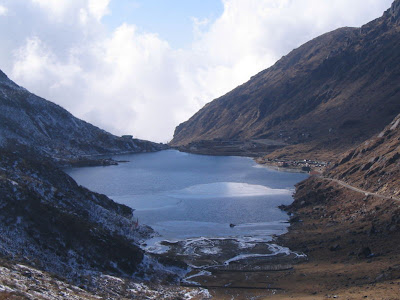
1. Changu (Tsom-Go) Lake.This is a sacred lake as per belief of the local people. Tsongo lake frozen over in Winter.

Nathula Pass. TsomGo lake situated at 12400 ft, is about a Km long and 50ft deep. This is 35 Km from Gangtok and the drive is of 2.5 hrs. Climb is pretty steep and there is need for woolens even in the summers, the winds can be pretty chilly. The lake is regarded extremely holy. Nathula Pass is situated at 14.400ft and is on the silk route; expect snow even in the summers. The wind is pretty chilly so carry heavy woollens. It is situated on the ancient trade route between China and India. The same has been reopened recently to boost trade with our northern neighbour. One can see Chinese soldiers on the other side of the border outpost. The Pass is heavily guarded and photography is restricted, one can get a view of heavy Artillery and military slogans written by arranging stones on the mountainside.

 Baba Harbhajan Singh Temple:
Northern Sikkim
You will have to allocate at least 3 days best if you can add another day for leisure
·      First day : Travel from Gangtok to Lachen. Reaching Lachen in evening.
·   Second day : Early morning trip to Gurodongmar lake with a small stop for breakfast at a village called Thangu. After Gurudongmar and a brief rest travel to Lachung.
·  Third day: Travel from Lachung to Yungthang the valley of Rodohedrons. Back towards Gangtok. 
The north Sikkim trip has both the attraction snow in winter and the Rhododendrons and alpine flowers in summer.
Flip side :All the trips have to be booked in advance due to the limited facilities at Lachen and Lachung and lack of communication with the hotel owners at these places.  The only media of communication are the tour operators in Gangtok ( No telephone coverage in these areas as yet). The government office in Gangtok for tourism is also not very forthcoming with the actual conditions in Lachen and Lachung, Every bodies bread and butter is linked to tourism in Sikkim hence the truth about the climate and road conditions are a closely guarded secret. 
Lachen and Lachung are the two places at which one stays during the visit. A minimum 3 day and  2 nights trip is required, 4 days and 3 nights will make the trip more comfortable but you will have to shell out around Rs 4000/ vehicle and 1500 per hotel room per day for each day extension. ( The tourist agent will ask you to be considerate with the Local hotel owner with regards to the food made available due to the difficulty in transporting materials to these locations). But the tourist operators can become more professional by providing what they promise as the same can be managed but the operators try to fleece small amounts in the name of hardship of the locals. After the earthquake in Sikkim the road conditions are very bad and there can be landslides that throws your schedule out of gear. bargain with the tour operator as the substitute offers if such an eventuality happens( usually they will not oblige once money is in their pocket).

Lachung is situated at the height of 8600 ft and is described as the most picturesque village of Sikkim.

YumThang: Lachung provides the basic amenities for an exploration of Yumthang valley. At Yumthang situated at 11800 ft, the tree line ends but the rhododendron still blooms. It has a hot spring rich in Sulphur. The route from Yumthang from Lachung is very picturesque and is lined with rhododendron; the views are the best in May. Yumthang is itself located on a flat valley near the tree line about 135 Km from Gangtok in the Northern Sikkim.
Lachen is the sister village of Lachung and is situated at the altitude of 9000 ft and at a 6 hr drive from Gangtok . Lachen is situated on a grassy flat plain from which the pine clad mountains rise. The village has 150 houses earlier inhabited only in winter.

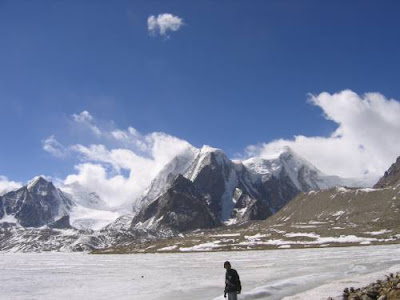
Gurudongmar Lake is also worth a visit in any season ( it will be covered with ice in winter and will look deep blue in summer). the Tibetian landscape and views are stupendous, though lack of oxygen at this altitude is a bother. Dont carry old and very small children to Gurudongmar . It is believed to be a blessed lake . Situated at the altitude of 17,100 ft, the lake freezes over in the winter except a one spot which the locals believe have been specially blessed. The local Buddhists and the Sikhs both have strong belief in the miraculous powers of the lake water.

Wednesday, March 21, 2012

Mandu can become a Unesco heritage site

Mandu brings back memories of the story of the love of the poet-prince Baz Bahadur and his beautiful wife, Rani Roopmati. It is home to India's most beautiful monuments bulit in Afghan style of Architecture. Elegant Islamic palaces, mosques and onion-domed mausoleum beside large medieval reservoirs .
Baz Bahadur, the last independent ruler of Malwa, retreated to Mandu to study music after being trounced in battle by Rani Durgavati. He fell in love with a Hindu singer named Roopmati and subsequently married her. When Akbar heard of Roopmati's beauty, he dispatched an army to Mandu to capture her and the long-coveted fort. Bahadur managed to slip away from the ensuing battle, but his bride, left behind in the palace, poisoned herself rather than fall into the clutches of the attackers.

The village group
Some of the fort's best-preserved buildings are clustered around the village. Work on the magnificent pink sandstone mosque on the west side of the main square, the Jama Masjid, commenced during the reign of Hoshang Shah and took three generations to complete. Said to be modelled on the Great Mosque at Damascus, it rests on a huge raised plinth pierced by rows of tiny arched chambers - once used as cells for visiting priests.


When to Visit :
Visiting mandu is best just after the monsoons, in August.
How To get there :
Mandu can be visited as a day trip from Indore (a distance of 98 kms), but it is a better option to spend a couple of nights there.
Tourists can be well adviced to avoid the direct buses to Mandu from Indore , one can travel to Dhar and pick up a local service to the fort from there . It is a 35 kilometer journey that takes over one hour. Direct services back to Indore run twice a day. Taxis charge around Rs.1000 per day ( rates are Rs 6/- per kilometer min 250 km /day ) you can bargain and get the above rates if you stay back in Mandu for 2 days. One can also get to Mandu by state bus from Bhopal, Ujjain and Maheshwar.


Where to Stay:
The Travelers' Lodge (Rs350-500), near the Sada barrier, has scenic views, clean rooms with attached bath and hot water. It's a one-kilometre hike from the main square where the buses pull in.
The Tourist Cottages (MP tourisms )Rs1200-1800), 2km south of the square, is Mandu's most comfortable hotel. The Tourist Cottages' pleasant semi-open-air restaurant is the best place to eat in the fort. Unlike the cafeteria in the Tourist Lodge, you don't have to order your evening meal in advance, and they serve beer in addition to the standard MPTDC menu of moderately priced Indian, Chinese and Western food.
About Mandu: Archaeological evidence suggests that the remote hill-top was first fortified around the sixth century AD, when it was known as Mandapa-Durga, or "Durga's hall of worship". Four hundred years later, the site became of strategic importance when the powerful Parmaras moved their capital from Ujjain to Dhar, 35 km north. The fort eventually fell to the Sultans of Delhi in 1305. While the Sultans were busy fending off the Mongols on their northern borders a century or so later, Malwa's Afghan governor, Dilawar Khan Ghuri established his own independent kingdom but he died after only four years on the throne, leaving his ambitious young son as the heir.
During Hoshang Shah's illustrious 27-year reign, Mandu was promoted from pleasure resort to royal capital, and acquired some of the finest Islamic monuments in Asia, including the Jama Masjid, Delhi Gate, and the Sultan's own tomb.
Mandu's monuments are from a unique school of Islamic architecture. Much admired for their elegant simplicity, the buildings are believed to have considerably influenced the Mughal architects responsible for building the famous Taj Mahal.
The Royal Enclave

Reached via the lane that leads west off the village square, the Royal Enclave is dominated by Mandu's most photographed monument, Ghiyath Shah's majestic Jahaz Mahal, or "Ship Palace". The name derives from its unusual shape, and elevated situation on a narrow strip of land between two large water tanks.A breezy rooftop terrace, crowned with four domed pavilions, looks over Munja Talao lake to the west, and the square, stone-lined Kapur Sagar in the other direction.
Hindola Mahal, or "Swing Palace":

With its distinctive sloping walls supposedly look as though they are swaying from side to side. The design is in fact, purely functional, intended to buttress the graceful but heavy stone arches that support the ceiling inside.
Sprawling over the northern shores of Munja Talao lake are the dilapidated remains of a second royal pleasure palace. The Champa Baodi boasts an ingeniously complex ventilation and water-supply system which kept its dozens of subterranean chambers, or tehkhanas, cool during the long summers.
The Hathi Pol, or "Elephant Gate", was the main entrance to the Royal Enclave. Once past its pair of colossal, elephant guardians, a track heads north to the edge of the plateau and the grand Delhi Gate. Built around the same time as Dilawara Khan's mosque, this great bastion, towering over the cobbled road in five sculpted arches, is the most imposing of the twelve that mark the battlements along the fort's 45-kilometre perimeter.
On the opposite side of the square to the Great Mosque, the Ashrafi Mahal, or "Palace of Coins", was a theological college (madarasa) that the ruler Muhammad Shah later converted into a tomb. The complex included a giant marble mausoleum and seven-storey minar, or victory tower, of which only the base survives.
Around the Sagar Talao
En route to the Rewa Kund, some more monuments are scattered around the fields east of Sagar Talao. Dating from the early fifteenth century, the Mosque of Malik Mughis is the oldest of the bunch. The main doorway has turquoise tiles with fine fine Islamic calligraphy on them.
A short way south of the mosque, is the octagonal tomb known as the Dai-ki-Chhoti Bahan-ka-Mahal. It is built on a raised plinth, still retains large strips of the blue ceramic tiles that plastered most of Mandu's beautiful Afghan domes.
A flight of steps leads up from the square to the large domed entrance porch. Beyond the ornate jali screens and bands of blue-glaze tiles that decorate the main doorway, you arrive in the Great Courtyard, enclosed by rows of pillars and small domes. The prayer hall, or Qibla, at the far end, is surmounted by three larger domes, and houses a small pulpit and some finely carved Koranic inscriptions.


Hoshang Shah's tomb (c. 1440),
Directly behind the Jama Masjid, is this group's real highlight. It stands on a low plinth at the centre of a square-walled enclosure, and is crowned by a squat central dome and four small corner cupolas. The tomb is made entirely from milky white marble - the first of its kind in the subcontinent. The Mughal emperor Shah Jahan brought his architects to admire the building before they began work on the Taj Mahal.


On the opposite side of the square to the Great Mosque, the Ashrafi Mahal, or "Palace of Coins", was a theological college (madarasa) that the ruler Muhammad Shah later converted into a tomb. The complex included a giant marble mausoleum and seven-storey minar, or victory tower, of which only the base survives.

The Rewa Kund group
The Kund nestles behind a rise further up the hill. Noted for its curative powers, the old stone-lined reservoir is popular with bus parties of locals. Water from the tank used to be pumped into the cistern in the nearby Baz Bahadur Palace.
The romantic Roopmati Pavilion, built by Bahadur for his bride-to-be, still rests on a ridge high above the Rewa Kund. Beneath its lofty terrace, the plateau plunges a 300m to the Narmada Valley. On a clear day the view is breathtaking.

Tuesday, March 20, 2012

NORTH SIKKIM TRIP PLAN

Visit to North Sikkim

My third visit to Sikkim , previous times i had visited Tsomgo lake and Nathula pass in east Sikkim.
This time i wanted to visit north Sikkim for Rhododendrons, Primula and many other Alpine flowers. The three day and two night trip was pretty hectic, but i felt it was better to come back to Gangtok rather than stay one more night at Lachen/Lachung. That would increase my cost by another Rs4000/ which is the per day vehicle charges. 

Itinerary:
Day-1
Arrival Bagdogra /NJP - Gangtok (O/N) 
Day-2
Gangtok - Lachen (O/N) 
Day-3
Lachen - Thangu - Chopta Valley - Gurudongmar Lake - Lachen - Lachung (O/N) 
Day-4
Lachung - Valley of flowers ( YUMTHANG) /Katao - Lachung - Gangtok (O/N)
Day-5
After breakfast  left for Bagdogra /NJ

Day 01.:
 Pick- up from hotel at Gangtok at about 10a.m.Proceed to Lachen (120k.m.) at an altitude of 9,800 ft. On the way stop for sightseeing at Tsahi Viewpoint, Kabi Lungstok, Naga Waterfalls, the confluence of Lachen Chu and Lachung Chu at Chungthang. Lunch will be served at Namok. You are likely to reach Lachen at late afternoon/in the evening. Night halt at Lachen surrounded by fir – clad mountain peaks, overwhelming peace and solitude.

Day 02:
 After breakfast left for Gurudongmar Lake(17000ft.) via Thangu (13,000 ft.) and Chopta Valley (13,200 ft.). Thangu Valley is a broad valley at the junction of Thangu Chu, Chopta , Chu and Lassur Chu. In the spring end / summer months one is fascinated by many hues all around as Rhododendrons, Primula and many other Alpine flowers are in full bloom. In the winter months one can play in the snow or even walk over frozen rivers. The Unspoilt beauty of the area will take ones breath away. We went back to Lachen for Lunch and a nap as the trip was very tiring. Low oxygen and low temperatures can cause some problems to individuals with low blood count and heart problems. Small children and old people are advised not to overdo any thing, even running can cause you to pass out, though mountain illness room ( MI room at the military outpost is equipped with oxygen cylinder for such eventuality but one can gaurd against such untoward event. the gurudongmar lake area has a typical Tibetan landscape of a cold desert. On the way we saw the beautiful Twin Waterfalls and BhimNala Waterfalls. Reached Lachung at late afternoon /in the evening and checked into our hotel.
Day 03:
After breakfast leave for Yumthang (11,800 ft.) On the way we were to visit the famous hot spring. Yumthang is a large valley surrounded by mountains where the tree line ends. In April/ May /June the valley erupts in a riot of colours as Rhododendrons, Primula and many other Alpine Flowers are in full bloom. In the winter months Yumthang is somber with snow all around, and the snow clad mountains adding to the ethereal beauty. Return to Lachung for Lunch, afterlunch pack off your luggage then drive back to Gangtok.
Travel to Katao & Yumisamdong (0point) snow point can also be arranged subject to availability of permits/ road and weather conditions. ( normally permits are not issued , you have to bribe your way in).Vehicle charges extra.


Rate offered to us was Rs 18,000/- net for 2 adult and 1 child.
Balance  paid on arrival at Gangtok.
Hotels: Lachung: Kanchendzonga Regency.
          Lachen:Twins Peak.

Tuesday, November 22, 2011

Sanjay Gandhi national park & Kanheri caves


The Sanjay Gandhi National Park

The Sanjay Gandhi National Park, or as commonly known, the Borivili National Park. A miraculously preserved forest land in the heart of an urban area, this park is very much within the city limits.
The thick forest cover of the park acts as the lungs of the city supplying fresh oxygen and acting as a sink. By serving as a huge natural generator of life-sustaining oxygen for the twin cities of Thane and Mumbai.
The forest also is an excellent catchment area for the Tulsi and Vihar lakes which provides drinking water supply to the Mumbai city.
The park is one its kind, which is surrounded by a metropolis and is still sustaining a sizeable population of Panthers. Panthers are the largest predators that roam this forest and can easily be spotted after dark; they even some times stray into residential area adjoining the national park.


How to reach:

Accessible from Borivili and Goregaon railway stations of Mumbai Suburban railways.


Where to stay: There are some rest houses, charges for 4 people Rs 200 with a Rs 100 per head extra charge, and Rs 200 as a deposit. The meals will be prepared by the chef on duty. The check in and check out timing is 8 a.m
There are some rest houses, charges for 4 people Rs 200 with a Rs 100 per head extra charge, and Rs 200 as a deposit. The meals will be prepared by the chef on duty. The check in and check out timing is 8 a.m
There are two bamboo cottages in the forest, which can hold approximately 100 people.


Best time to visit:

For bird watching, general viewing and visit to Kanheri Hills, November to February is ideal, when the weather is cooler. However April-May is the best for mammal tracking, as water supply is limited and visibility is the greatest as the animals come out to cool off at the watering holes.
.


The Sanctuary timings are :
09.00 hrs to 17.30 hrs
:
09.00 hrs to 17.30 hrs

The Tiger/ Lion Safari is closed on Mondays

Rates per trip:
Adult -Rs.30, Child (5 to 12 years of age): Rs.15 Child below 5 years: Free.
:

Adult -Rs.30, Child (5 to 12 years of age): Rs.15 Child below 5 years: Free.


Kanheri Caves


The Kanheri Caves which date back from 1st century BC to the 9th century AD, is located within the park area presents an glimpse of the history and the culture of Buddhism in India. There are about 109 Buddhist caves, carved out of the rock. Most are simple small chambers, known as Viharas (cells for monks). Few are larger and deeper chambers known as Chaityas (used for worship). The main Chaityas has huge figure of the standing Buddha - 7 m. tall - on each side of the entrance.
A series of 34 pillars surrounds the interior hall and an Stupa (shrine) at the far end. The entire structure is carved out from the stone.
These caves are a Buddhist establishment of monks who dwelled on the ancient trade routes. The whole cave area is the site of nearly 100 or more inscriptions - three of these are in Pallavis, two in Sanskrit, one in Devnagri and the rest in Brahmi script.
Sanjay Gandhi National Park map

Monday, December 13, 2010

Planning Dooars

The Dooars valley is famous for its wildlife sanctuaries, the notable ones are the  Gorumara National Park (75 km from Siliguri), Chapramari forests (68 km from Siliguri)Buxa Tiger Reserve (200 km from Siliguri) and the Jaldapara wildlife Santuary (124 km from Siliguri) are the important ones.
Siliguri is the to gateway to the Dooars. As Cooch Behar is the headquarters of the North Bengal State Transport Corporation, the place is well connected by long distance bus routes to Siliguri as well as to Kolkata, Jalpaiguri and other areas of the stateThere is a broad gauge railway service connecting Cooch Behar with Kolkata via New Jalpaiguri (NJP railway station near Siliguri). The meter gauge railway service via Alipurduar can also be avail of. The nearest airport to Siliguri is Bagdogra, connecting Kolkata, Delhi and Guwahati.
View Larger Map

Jaldapara Wildlife Sanctuary
Situated in Alipurduar Sub-division of Jalpaiguri district  of West Bengal  at aboutt 124 km from Siliguri. This sanctuary was constituted in  1941 for the protection of Wild Life, particularly one-horned Rhinoceros which was threatened with extinction. River Torsa runs through the sanctuary. The forest consists mainly of  tall elephant grasses. The wildlife, in addition to one-horned Rhinos, are Royal Bengal Tigers, wild Elephants, Deer, Sambhar, Barking Deer, Spotted Deer and Hog Deer, wild Pig, Bisons and a number of Birds, Peafowls.
General Information
Area : 114 sq. kms.
altitude : 61 metres (200 ft.)
Best Season : October to May, particularly March & April, when new grass is growing.
Off Season : 15th june to 15th September (Sanctuary closed)
ConductedTours
Jaldapara Wild Life Sanctuary including Dooars & Phuntsholing (Bhutan) - 2 days.
Rates : Accommodation at Hollong Tourist Lodge/ Jaldapara Tourist Lodge at Rs. 1100 per head for Indian tourists and Rs. 1575 per head for Foreign tourists.
Tour is inclusive of food, accommodation, elephant charges & transportation.
Tour starts from Tourism centre, Govt. of West Bengal, M-4 Building, Pradhan Nagar, Hill Cart Road, Siliguri - 734403 every Saturday at 12 noon and returns to Siliguri on Sunday by 5 p.m.Elephant ride is arranged for viewing of wildlife, preferably at dawn.
Arrangements are available at Hollong Tourist Lodge,
P.O. - Madarihat, Phone - (03563) 262228

Accommodation
Jaldapara Tourist Lodge
P.O. - Madarihat, District - Jalpaiguri
Phone : Madarihat (03563) 262230
Number of rooms :
22 double bedded rooms @ Rs. 1000 including all meals;
13 bedded dormitory @ Rs. 300 per bed including all meals
6 double bedded Hut Rs. 650 per cottage with food.

Reservation Authority
Tourism Centre, Govt. of West Bengal
3/2, B.B.D. Bag (East), Kolkata – 700001
Phone : 22485917 / 22488271
Tourism Centre, Govt. of West Bengal
M-4 Building, Pradhan Nagar, Hill Cart Road,
Siliguri – 734403
Phone : (0353) 2511979, 2511974, 2432561
Tele Fax : 2511979, 2432561

Transport
Road : Jaldapara is connected by road with Darjeeling and Siliguri & other towns of North Bengal. North Bengal State Transport Corporation Buses, Bhutan Govt. Mini Buses and Private Buses are available from Siliguri to Alipurduar via Madarihat.
Route :-
a) Darjeeling - Siliguri - Jalpaiguri (via New Teesta Bridge) - Maynaguri - Dhupguri - Gairkata - Birpara - Madarihat (140 miles or 204 km) or
b) Darjeeling - Siliguri - Sevoke - Bagrakote - Mal - Chalsa - Nagrakata - Binnaguri - Birpara - Madarihat (214 km).
Journey time from Siliguri is about 4 hours

GARUMARA NATIONAL PARK

This park is located in the Dooars region of Jalpaiguri district. River Murti, Jaldhaka and Ingdong have passed through this national park. In the year 1949, Garumara Forest was declared as wildlife sanctuary when it was a small forest. Later in the year 1992, it was declared as a National Park, comprising of 89 kms. of diverse forest.
Lataguri is the nearest small Tourist Strip near Garumara National park. Private Resorts / accommodation are available here. Tourist may visit Garumara in day time staying at Lataguri.
Day visit permission to the National Park may be obtained from : Nature Interpretation Centre, Department of Forest 9Govt. of West Bengal), Lataguri

HOLLONG TOURIST LODGE:
P.O.- Madarihat, Dist.- Jalpaiguri
Phone : (03563) 262228

No. of rooms : 7 double-bedded rooms
Rs. 425 + Service Charge Rs. 150 for Indians
Rs. 850 + Service Charge Rs. 300 for foreigners.
Food (dinner, breakfast & bed tea only ) compulsory @ Rs. 110 for Indians and Rs. 160 for foreigners.]

Tourism Centre, Govt. of West Bengal
M-4 Building, Pradhan Nagar,
Hill Cart Road, Siliguri - 734403
Phone : (0353) 2511979, 2511974, 2432561
Tele Fax : 2511979, 2432561
E-mail : maitl@dte.vsnl.net.in

Tourist Bureau, Govt. of West Bengal
1, Nehru road, The Mall,
P.O. – Darjeeling
Phone : 254050

Divisional Forest Officer
P.O. & Dist. - Cooch Behar
Phone : 227185

Tuesday, May 18, 2010

Must see in Hampi


The must-visits in Hampi are
  • Virupaksha Temple, 
  • Hampi Bazaar,
  •  Monolith Bull,
  •  Lakshmi Narasimha temple, 
  • Hemakuta Hill temples,
  •  Big Shivlinga, 
  • Vithala Temple (the famous Stone Chariot is located here), 
  • Hazara Rama Temple, 
  • Royal Enclosures, Queen's Bath, Zanana Enclosure (which also houses the Lotus Mahal), 
  • Elephant Stables, 
  • Achyut Raya temple,
  •  Statue of Ugra Narsimha, Virupaksha Temple,
  •  Mahanavmi Dibba, the Stepped Bath
  • The Matanga Hill (from where one can see the most beautiful sun set ever).
 All these places are towards Hampi Bus Stand area and you don't need to cross river.

View Larger Map
Buy a local map and cover most of  the places on your own taking a bike/scooty on rent. Otherwise hire and auto to do local sight seeing. It would cost you around Rs 400-Rs 500.

Tungbhadra dam is 16 km from Hampi towards Hospet. One can see Tungbhadra dam and return from Hospet. It takes around 45 min to 1 hr to see Tungbhadra dam
The old capital called Anegundi, across the river from Hampi also some sites. The Hanuman Temple on Anjenaya Hill (572 steps, is believed to be the birth place of Hanuman) and the Old Palace are  worth a visit.

How to reach HAMPI and travel in Hampi

Best time to visit: October to March
Hampi is in central Karnataka, approximately 350 kilometers  from Bangalore. Your gateway town to Hampi is Hospet In short if you are coming from far places to Hampi ( example Chennai, Mumbai , Bangalore, Delhi , Kolkata etc ), look for a direct ( or even split journey ) train connection from your place to Hospet Jn ( HPT) . Hampi is a short bus ride from Hospet town.


Hubli and Guntakal are some major rail junctions west and east of Hospet ( Hampi) respectively. There are a bit far from Hospet, but still you may get some long distance train connections from these junctions. You can explore the possibility of using these places as the midway transit point to reach Hampi. Please note that the train details given here could be changed. For the current & accurate updates checkup with the Indian Railways website

Garib Nawaz Express (Train No: 6531 / 6532) is a long distance train that links the north, west and south India. This weekly train starts from Ajmer in Rajastan and terminates at Yesvantpur Jn , a suburb of Bangalore in Karnataka.
Amaravati Express (Train No.2847 / 2848 ) is a cross-country train that connects east India to the west. That is, Goa (Vasco-da-Gama) in the west coast with Howrah Junction in the east. That train passes though Hospet Junction, the nearest railway station for Hampi. Those coming from the eastern parts of India to Hampi, this is a suitable train. The train covers its 2155 kilometers (1340 miles) journey in 2 days.
Amaravati Express (Train No.2848) starts from Vasco-da-Gama on Tuesdays, Thursdays, Fridays and Sundays, and passes through Hospet on the same days.

The return train (Train No.2847) from Howrah starts on Mondays, Tuesdays, Thursdays and Saturdays, and passes through Hospet on Mondays, Wednesdays, Thursdays and Saturdays.
Hampi Express that connects Bangalore and Hubli is a popular option to reach Hampi from Bangalore. The train passes via Hospet, the nearest railway station for Hampi

Haripriya & Rayalaseema Express (Train No.7416 /Train No.7429 ) are a pair of trains that connects Hampi (Hospet Jn) with Hyderabad , Tirupati and C. Shahu Mharaj Terminus (Kholapur ). The route bifurcates at Guntakal Junction. The coaches heading towards Hyderabad and Tirupati are separated at Guntakal Jn and connected to the trains heading to the respective destinations

Ferry:
Most of the guest houses are on other side of the river (area called Virupapur Gadde). To access them, you need to cross river by Motor boat (Rs. 10 for locals, Rs. 15 for tourists, boat runs until 6:00 pm. on missing the boat, you have to pay auto Rs 500-600 to take you other side via Hospet-Hugili- Hanumanhalli, which is a 40km tour. Beware During moderate/high rains, gates of Tungbhadra dam are opened which increases the water level and water flow in river. In that case, one might get stranded on other side of river (Virupapur Gadde area)

Accomodation in hampi

Staying options in Hampi hotels and guesthouses.


Hampi's Boulders
Hampi's Boulders is the best up stay option in Hampi. This remotely located resort is a private retreat, surrounded by nature. It is located amidst the boulders on the banks of Tungabhadra River, in the Yamini hills which is  a 25 minutes drive from Hampi. The hotel car can pick and drop one off. After a hectic day of sightseeing,it is a welcome escape to the resort.
Rates range from 6,000 rupees ($130) per night for a non air conditioned double, up to 10,000 rupees ($220) per night for an air conditioned executive suite. Breakfast and dinner are included.

Shanthi Guesthouse
Shanti Guesthouse is very popular. It's located across the river in Virupapur Gadde, in lush tranquil surroundings. The cheap, older rooms are a bit shabby. However, the newer cottages are recommended and offer  views of the rice paddies, rocks, and sunset. Guests can also welcome to cook their own food in the restaurant kitchen, which serves a range of cuisine from Israeli to Thai. One of the features that makes this place so restful are the swing beds, suspended out the front of each room.
 300-500 rupees ($6.50-11) per night for a room, and 1,000 rupees ($22) for a cottage.

Mowgli Guesthouse
Popular with backpackers, and located across the river in Virupapur Gadde, is Mowgli Guesthouse. The same family has been running the guesthouse for more than 17 years. It started off with only four rooms, and has grown to offer over 35 different rooms and cottages. Standard double rooms, with shared bathroom, start from 250 rupees ($5.50) per night. Expect to pay 800 rupees ($17) for a cottage overlooking the paddy fields, and 1,200 rupees ($26) per night for an air conditioned room with private balcony. The guesthouse also has pool tables, and an excellent restaurant that serves fresh homemade pizzas, Israeli and Indian food.

Padma Guest House
Padma Guesthouse is a popular choice in a quiet street of chaotic Hampi Bazaar. Consisting of a range of rooms in a private home, the guesthouse is run by a welcoming family and friendly staff. It's very clean, and is suitable for both couples and families. The better quality rooms on the first floor, with a view of the ruins and Virupaksha Temple, are recommended. 600 to 1,000 rupees ($13-22) per night for a double room, depending on the room.
• Directions: From the Hampi bus stand, cross the road and walk into the lane opposite the bus stand. The Padma Guesthouse will be on your left.
• Phone: +91 8394 241331.

 Gopi Guesthouse
A good option for singles and backpackers, the Gopi Guesthouse is also located in a lane of the central Hampi Bazaar area. This guesthouse is another family-run establishment, with an assortment of family members undertaking various roles, including making travel arrangements for guests. The highlight of the guesthouse is its rooftop restaurant, which is renowned for its tasty food and view of the Virupaksha Temple tower. Rates start from 600 rupees ($13) per night, plus tax. All rooms have attached bathrooms.
Directions: Hampi bus stand area, near Virupaksha Temple.
Phone: +91 8394 241695.     / Email: kirangopi2002@yahoo.com

Other accomodation

Hampi Boulders Resort , +91-22-24042211, Email: bouldersresort@nivalink.com

Hotel Mayura Vijayanagar, Thungabadhra Dam Hospet, Tel: +91-8394-48270

Hotel Priyadarshini, Station Road, Hospet, Tel: +91-8394-48838.

Hotel Malligi, 6/143, J. N. Road, Hospet - 583 201. Phone: +91- 839 4228101, Fax : +91-839 4227038, Email : malligihome@hotmail.com

Hotel Mayura Bhuvaneswri, Kamalapur, Hampi. Tel: +91-8394-51374

KSTDC Cottages.Tel: +91-8394-8108

Useful websites:

Friday, January 29, 2010

A nice hotel in calcutta

This is a posting mainly for indian travellers. the hotel i stayed in calcutta this time was near Chandni Chowk metro station:
Hotel Penguin
18, Jadunath Dey Road,
 Kolkata- 700012,
( near Joga jog Bhawan, this is the landmark).
 The hotel is adjacent to St Joseph's School. and funtions as a guest house for State bank of India Officers.
 The double bedroom rates are : Rs 700/ per day  for non Ac and Rs 900/ day for A/c rooms.
 The Triple bedroom rates are : Rs 900/ per day for non Ac and Rs 1000/ day for A/c rooms

View Larger Map
Another place where one can stay is Club inn Rs 1540 (onwards)/- per day but rooms are better. All the benefits of the above hotel remains,

View Larger Map